Guido Ignatti: Tapiados
Past exhibition
Overview
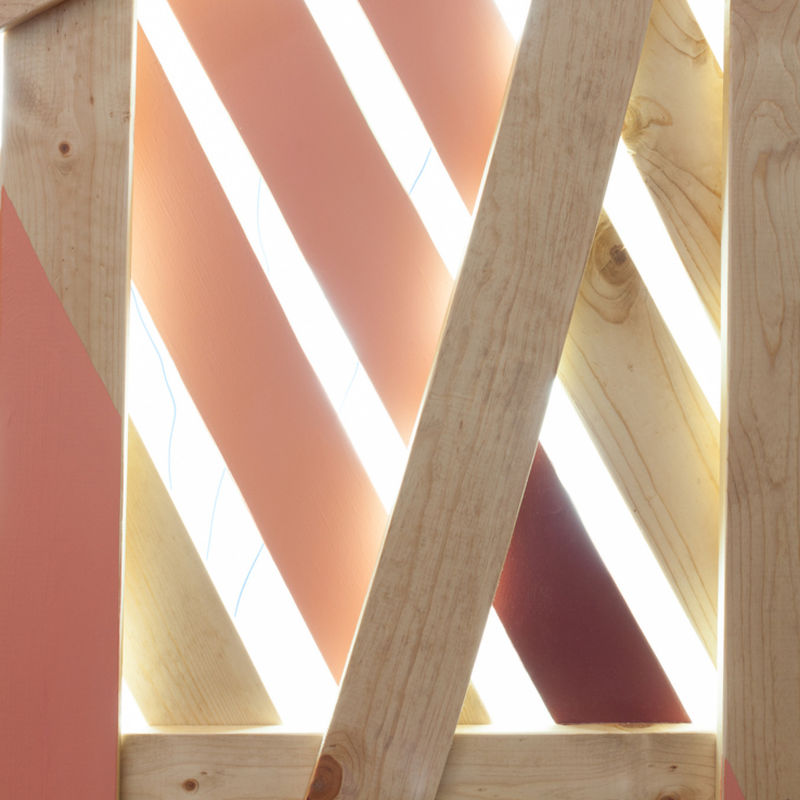
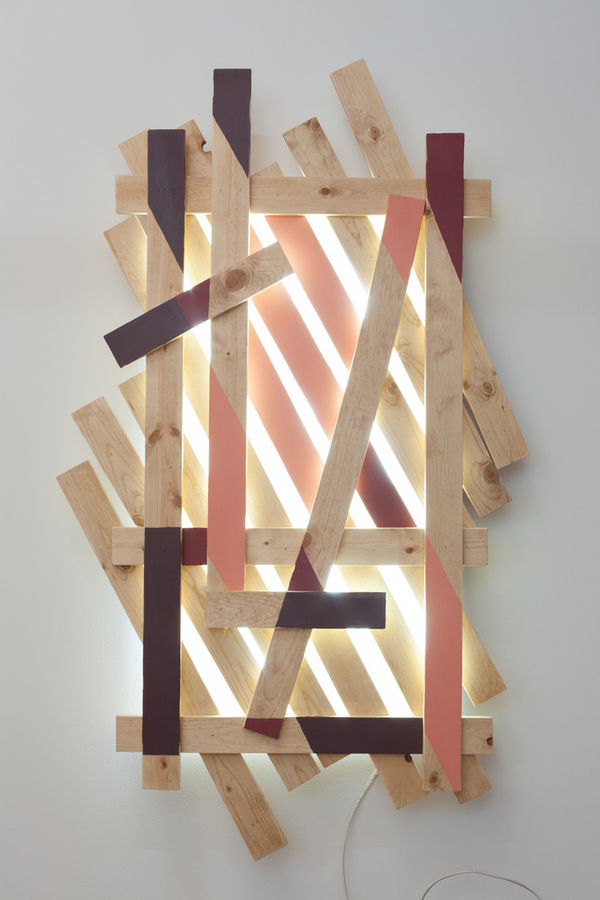
Detail, Guido Ignatti, Cuatro, 2016, enamel on wood with fluorescent bulbs, 72 x 44 in. (182.9 x 111.8 cm)
Ignatti’s trompe l’oeil constructions encourage this illusion, even as they unmask themselves, revealing the bulbs and wires and thus their own artifice.
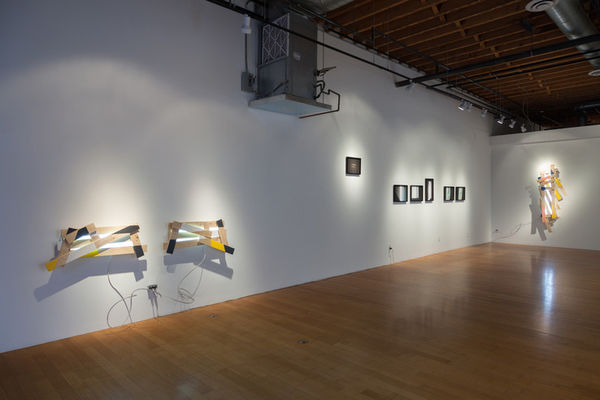
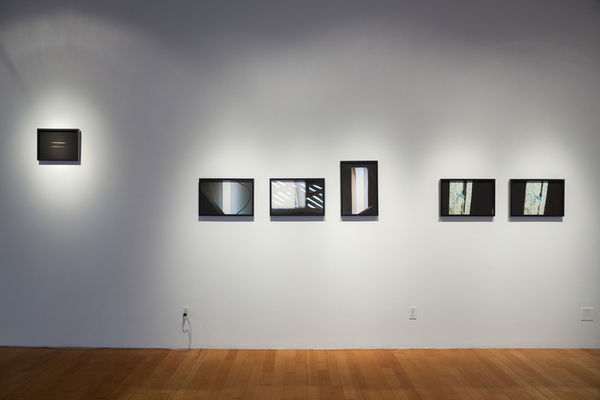
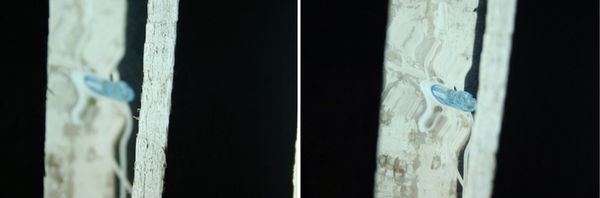
The exhibition includes a number of Ignatti’s characteristic “tapiados,” works made of painted wood and electrical lighting that evoke contemporary urban landscapes and engage with the history of abstraction, as well as photographs that reflect on the tapiado genre.
“Tapiado” is the Spanish word for structures—made of wood, cement, or bricks—that wall up a door or window, sealing off a passage, a room, or a building. Ignatti’s tapiados conjure up the sensation of blockage, but they also create the feeling of an opening, of some other space behind them or in their illuminated interior. Ignatti’s trompe l’oeil constructions encourage this illusion, even as they unmask themselves, revealing the bulbs and wires and thus their own artifice. They move back and forth between claiming three-dimensional depth and undoing it. This creates a rich dynamism that recalls the traditional tensions in painting between figure and ground, as well as many of the modern debates about abstract painting, and in particular, about the ability of painting to serve as a representational space or as a site for sensing the possibility of a better world.
Works




Installation Views