Dmitri Obergfell: The Idiot's Defense | Project Room
Current exhibition
Overview

Detail, Dmitri Obergfell, Breath of a Vessel No. 1, 2025, ceramic, 16 x 9 x 12 in. (40.6 x 22.9 x 30.5 cm)
The works situate personal memory within broader cultural frameworks, tracing the threshold where private interiority meets structured cultural systems.
Chess match at the gallery: Thursday, April 9, 6–8 PM
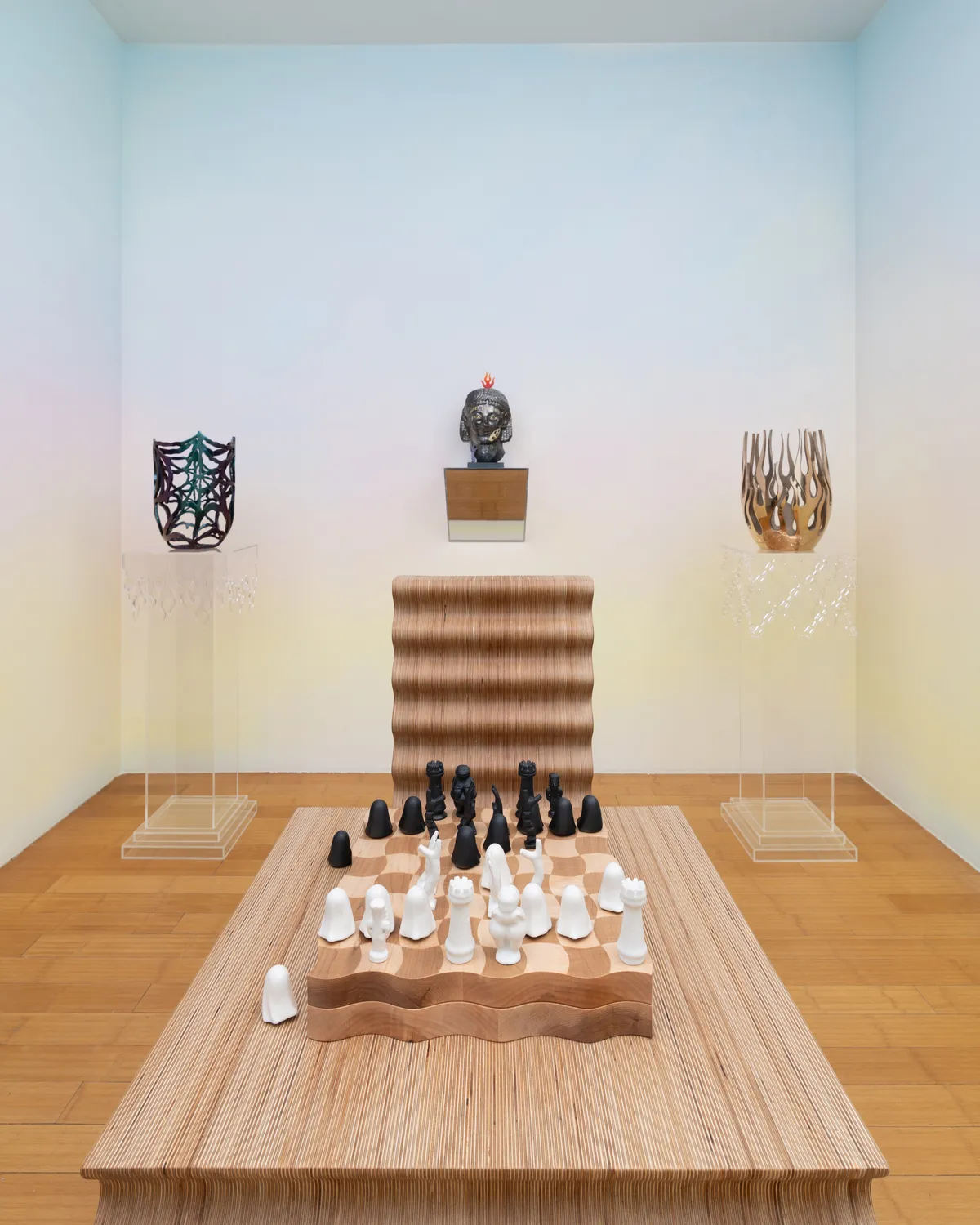
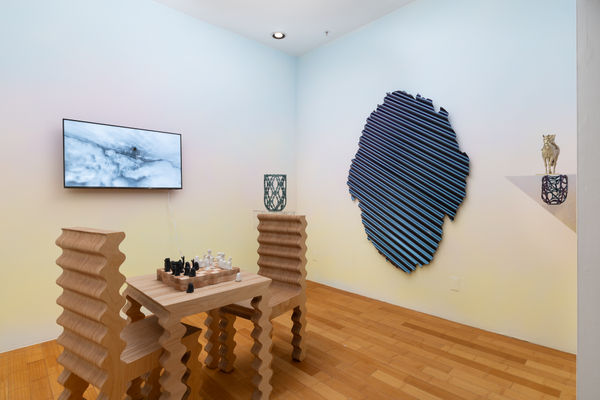
David B. Smith Gallery is proud to present The Idiot’s Defense, by Denver, CO-based artist Dmitri Obergfell. Obergfell presents a series of sculptures––including vases, figural sculpture, smoking paraphernalia, and a chess set––set atop clear pedestals and custom wood furniture. Blending functional design objects and sculptural elements as well as combining both ancient and pop references, together the works contemplate the frameworks that shape experience.
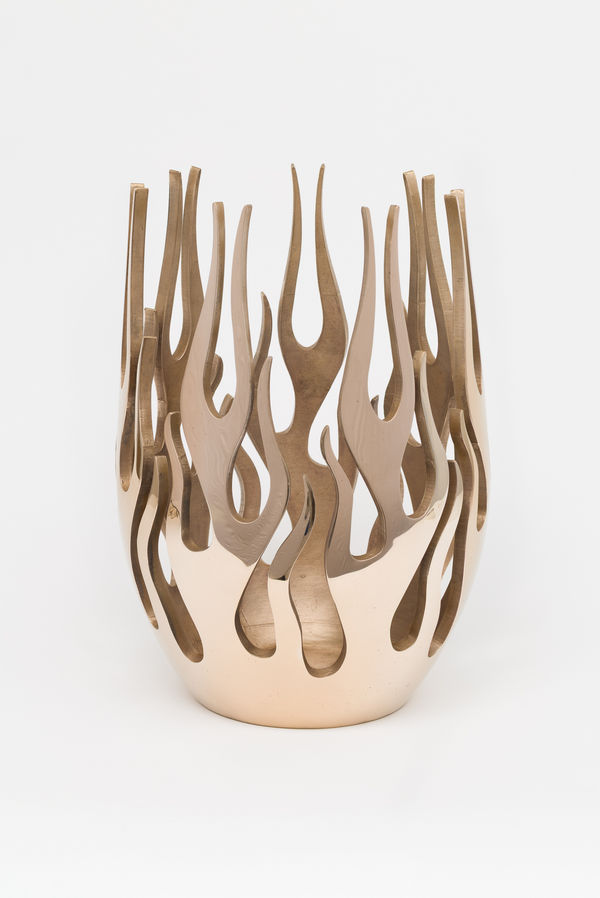
From the Venus of Willendorf as queen to flame vessels cast in mirror-polished bronze, archetypal forms and contemporary iconographies intersect across the exhibition. With deep metaphorical ties to chess theory, philosophy, and ancient civilizations, the works situate personal memory within broader cultural frameworks, tracing the threshold where private interiority meets structured cultural systems. This dynamic unfolds materially through symbols that traverse vast historical and aesthetic registers—from a public-domain 3D scan of an Athenian artifact from the Louvre to the highly stylized eyes of Japanese anime— collapsing antiquity and contemporary visual culture into a shared symbolic field.
More broadly, the exhibition title references three texts: The Luzhin Defense by Vladimir Nabokov, The Idiot by Fyodor Dostoyevsky, and the final chapter, “Idiotism,” in Psychopolitics by Byung-Chul Han. Across The Luzhin Defense, The Idiot, and Han’s “Idiotism,” the figure of the idiot emerges as someone who disrupts structured systems—whether chess, society, or neoliberal performance—by refusing or failing to fully internalize their strategic logic. Obergfell pulls from these texts, likening the artist's position in society to the idiot's, and asking how one might exist within systems of power without being fully absorbed by them.
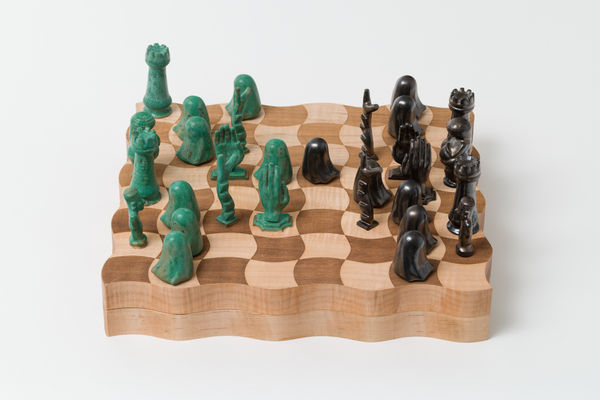
Here, game-play becomes a container for chaos, one where the individual may find themselves both protected and limited by rigid structures that they exist within and willingly adopt, represented by the chess set as the centerpiece of the exhibition. Obergfell has had a lifelong relationship with chess, finding enjoyment and comfort in the focus and strategy necessary to excel. Having spent hours of his childhood in solitude, a portable electronic chessboard came to symbolize that formative period. He was drawn to its structured, self-contained world of focus and order, one that nevertheless allowed for chance. That early relationship returns here in material form. Featuring hand-built ceramic pieces, parallels between ancient belief systems, late-stage capitalism, and modern sensibilities come to the fore in The Idiot’s Defense, as Obergfell offers cultural critique informed by personal narrative.
Works
-
 Dmitri Obergfell, The Idiot’s Defense, 2026
 -
Dmitri Obergfell, The Idiot’s Defense, 2026
-
Dmitri Obergfell, Corrugated Cafe table set, 2026
-
Dmitri Obergfell, Permeable Vase (Web), 2025





Installation Views




News